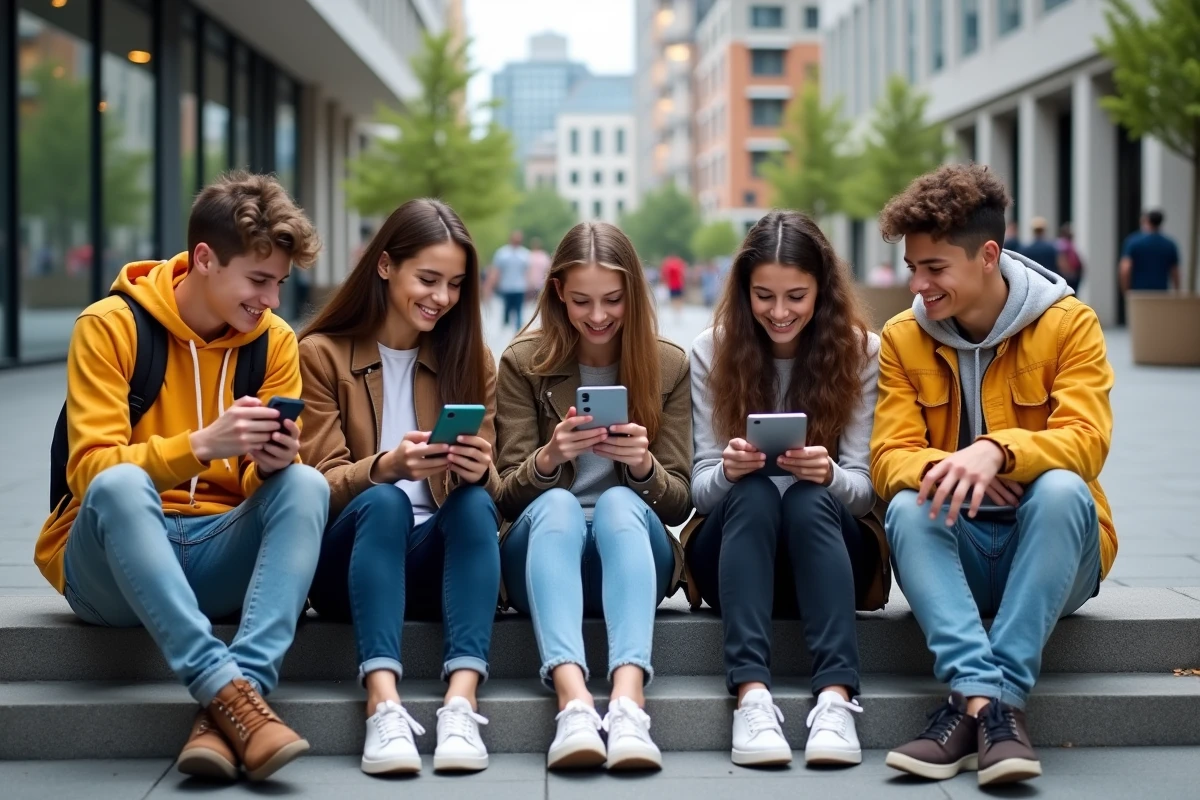
The figures for youth participation in elections rarely exceed 50%, but the rate of cultural content creation on social media is exploding every year. While some institutions struggle to attract this audience, new platforms offer them an unprecedented space for expression.
Civic initiatives led by those under 25 are multiplying, sometimes far from traditional information channels. The codes are changing, the formats too, and access to news now goes through tools designed to stimulate curiosity and sharing.
What’s really changing: the news and trends shaping youth
The way young people inform themselves is breaking free from old reflexes. Today, youth news and youth trends evolve at the pace of notifications. The internet is firmly at the forefront of habits, well ahead of television or print media. Recent studies confirm this: 57.3% of young people prefer to get their information online. In the face of this wave, social media and innovative formats are becoming the new reference points. In this continuous flow, vigilance is essential, and the demand for quality has never been stronger.
One event particularly marks the school year: the Press and Media Week in Schools. The goal is clear: to provide every student with the tools to adopt a civic stance towards information. More than 1,800 media outlets are joining this event, from print media to radio and digital platforms. The program includes a variety of actions:
- Practical and immersive workshops to understand how news is made
- Engaging debates with journalists to awaken critical thinking
- Educational materials tailored to each age group to deepen understanding of the media
These initiatives create a real space for collective reflection, where one learns to decipher information and exercise judgment.
The association Fréquence écoles, for its part, closely examines the digital daily life of children and teenagers. Its sociological survey highlights a multitude of practices, often collaborative, where information becomes a pretext for dialogue and debate, both at school and at home. This is where the first critical reflexes are forged, under the attentive gaze of families and teachers.
Specialized media, like JD Mag, are rethinking their content for a generation that seeks meaning, speed, and a plurality of viewpoints. This renewed connection between youth and media, in France and elsewhere, reshapes the contours of culture and disrupts the benchmarks of traditional information.
What topics excite 7-25 year-olds today? Culture, society, and current concerns
It’s impossible to fit 7-25 year-olds into a single mold: their interests are multiple, fluid, and shape the face of contemporary culture. Culture and current events converge in shared passions. Music, for example, stands out as a true generational marker. The fervor surrounding concerts, whether waiting for the return of an icon like Céline Dion or anticipating her arrival in Paris, illustrates this need to vibrate together and share emotions live.
Before seeing artists on stage, many follow music news through social media or streaming platforms, commenting on every announcement or performance. But music isn’t the only thing that brings people together: other realms captivate as well.
Here are some topics that spark conversations and stimulate creativity:
- Video games: worlds like that of Harry Potter bring entire communities together, where tips, theories, and fan art are exchanged.
- Drams and series: the wave of new fictions, notably the play Drama Yellow Letters, fuels debates and imagination, a testament to the enthusiasm for original forms of storytelling.
- Sports: high school students, in particular, remain attentive to sports news, whether following competitions in France or internationally. Major events are an opportunity to gather, exchange, and get excited together.
Collected testimonies confirm this: this generation is interested in societal debates, follows major global issues, and appropriates digital tools to enrich their daily lives with news and culture.

Discover, engage, share: how to follow news that resonates with you and not miss anything
To stay informed, one must diversify sources and formats. The figures show it: a majority of young people, 57.3% according to the Fréquence écoles survey, prefer news on the Internet. But beyond the numbers, it’s the variety of media that makes the difference. There is a wide range of media, each with its own specifics:
- Short videos and podcasts for quick information, at one’s own pace
- Interactive articles and educational content that promote in-depth understanding
- Social platforms where news is shared and discussed in real-time
Choosing channels becomes an act of autonomy. Some subscribe to engaged media to receive reliable information, while others prefer to comment on news in forums or discussion groups. Information circulates, transforms, and is shared. At school, debates and meetings with journalists, especially during the Press and Media Week in Schools, stimulate critical thinking and invite students to go beyond mere consumption to truly engage.
Family is never far away: discussions at home open new horizons, allow for confronting viewpoints, and question society together. Here, every exchange matters and enriches individual reflection.
Sharing news also means becoming an actor. Young people are no longer just passive readers: they comment, debate, and transmit information in their own way. The collective debate is nourished by their voices, choices, and desire to understand and make heard what truly matters to them. News is no longer a distant affair: it is created every day, at the click of a button and through conversation.