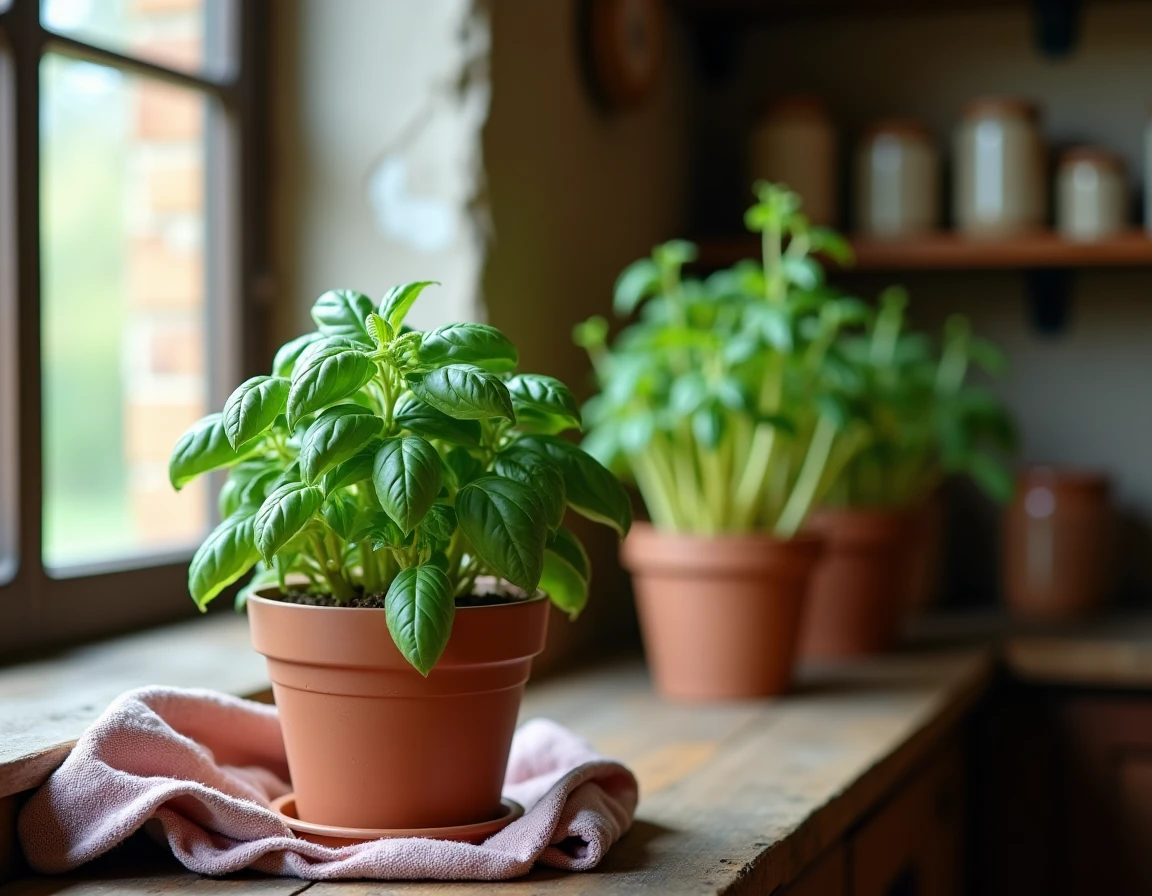
A basil planted next to a rosemary in the same pot is the classic scenario of a well-intentioned balcony that goes wrong in three weeks. One demands water every two days, while the other hates having wet roots. Before discussing good associations, it is essential to identify the plants that pose a real problem of cohabitation with basil, whether in the vegetable garden, in a planter, or in a pot on a windowsill.
Basil and Mediterranean plants in the same pot: the watering trap
The most common reflex is to group all the herbs in the same container. Lavender, rosemary, thyme, and basil end up in the same soil, on the pretext that they are used together in cooking. The problem is strictly hydraulic.
Basil is a water-hungry plant. Its soil must remain moist without being waterlogged. Lavender and rosemary, on the other hand, are xerophytic plants adapted to dry, well-draining soils.
Experiments conducted on balcony vegetable gardens in Brussels and Lyon confirm this observation: basil quickly suffers when it shares a pot with Mediterranean plants. Either you water enough for the basil and the rosemary rots, or you water little and the basil wilts.
You can find these same gardening tips on Jardinier.net, where the recommendation is clear: do not put basil and lavender or rosemary in the same pot. If you want to keep them close, a compartmentalized container with soil separations allows each plant to receive the appropriate watering.
Thyme poses the same type of difficulty. Its water needs are very similar to those of rosemary, and its growth in overly moist soil slows considerably. Separating herbs by water needs is fundamental before any other considerations about companion planting.
Fennel and large Apiaceae: underground competition with basil
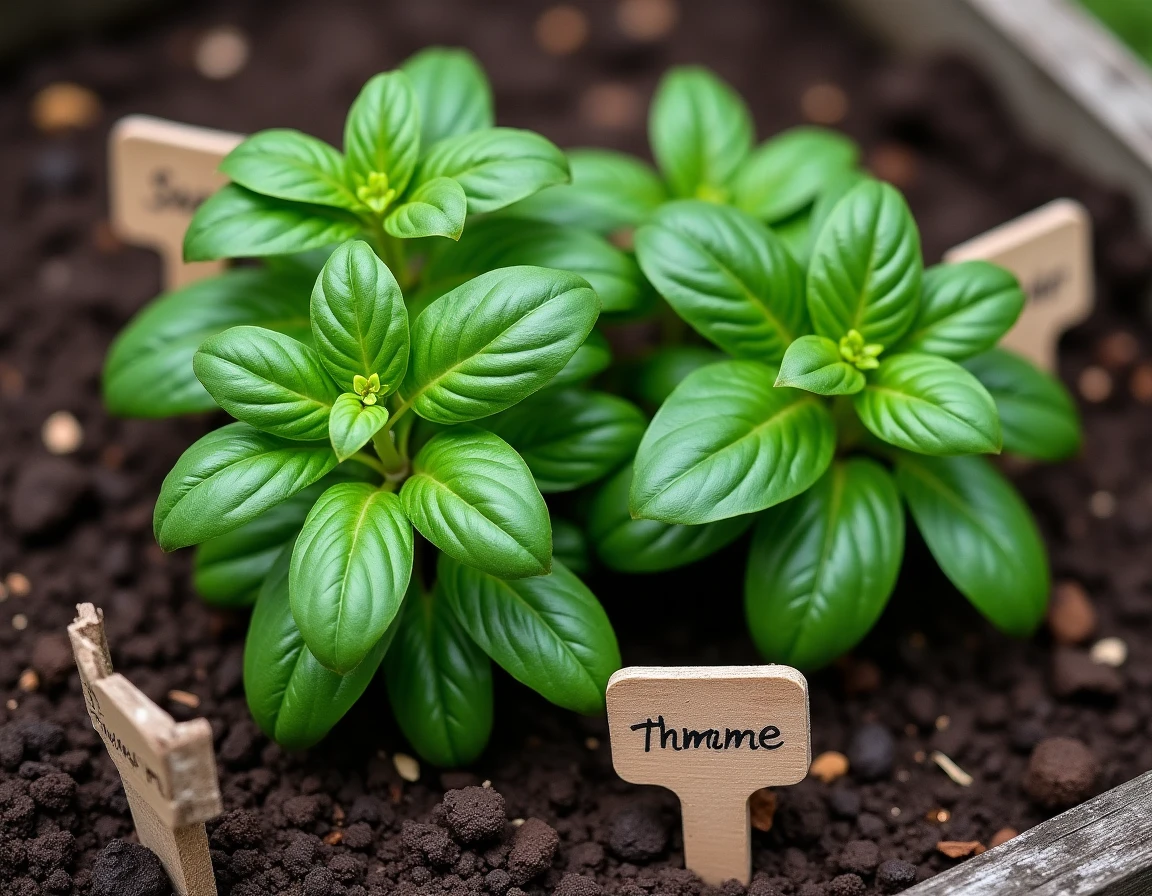
Fennel has a bad reputation in the vegetable garden, and for good reasons. In organic market gardening in Provence, technicians have observed that large Apiaceae (fennel, dill, chervil grown in open ground) engage in direct root competition with basil. Their root systems explore the same soil horizons and capture the same nutrients.
Fennel is the most documented case. It releases allelopathic substances into the soil that inhibit the growth of many neighboring plants. Basil, with its relatively shallow roots, is particularly exposed. Smaller leaves, slowed growth, and a plant that never really develops are observed.
Keeping at least one meter between fennel and basil in the vegetable garden is a precaution that is widely agreed upon among market gardeners. In pots, the question doesn’t really arise: no one puts fennel in a planter. However, dill may tempt urban gardeners, and feedback on this point varies. Some observe no problems in separate but close pots, while others notice clear competition as soon as the roots touch.
Host plants for aphids and whiteflies: roses, ornamental sages, geraniums
People rarely think about pests when planning the location of basil. Yet this is an angle that professionals closely monitor. Technical sheets from the Loire-Atlantique agricultural chamber report a recurring problem: roses, ornamental sages, and zonal geraniums host populations of aphids and whiteflies that then migrate to basil in spring.
The mechanism is simple. These ornamental plants attract pests early in the season. Once the colonies are established, they spill over into neighboring crops. Basil, with its tender leaves and dense foliage, becomes an easy target.
The concrete consequences for basil are:
- Colonies of aphids on the undersides of the leaves, causing curling and gradual yellowing
- The presence of whiteflies that weaken the plant and promote the development of sooty mold, a blackish fungus on the leaves
- A compromised harvest, as the affected leaves lose their aroma and texture
In the garden, it is advisable not to place basil right next to a rose bed or a border of geraniums. On a balcony, a few meters of distance is generally enough to limit pest migration.
Cultivation errors that worsen basil’s bad neighbors
A bad neighbor alone is not always enough to kill a basil plant. What often exacerbates the situation is a combination of an unsuitable association and basic cultivation errors.
Watering from above promotes fungal diseases, especially when basil is flanked by plants that keep moisture around its foliage. Watering should always be done at the base, directly on the soil, never on the leaves.
The choice of soil also matters. A soil mix that is too compact retains water and exacerbates cohabitation problems with plants that have different needs. A light, well-drained substrate with a bit of compost gives basil the best chances to thrive even in a constrained space.
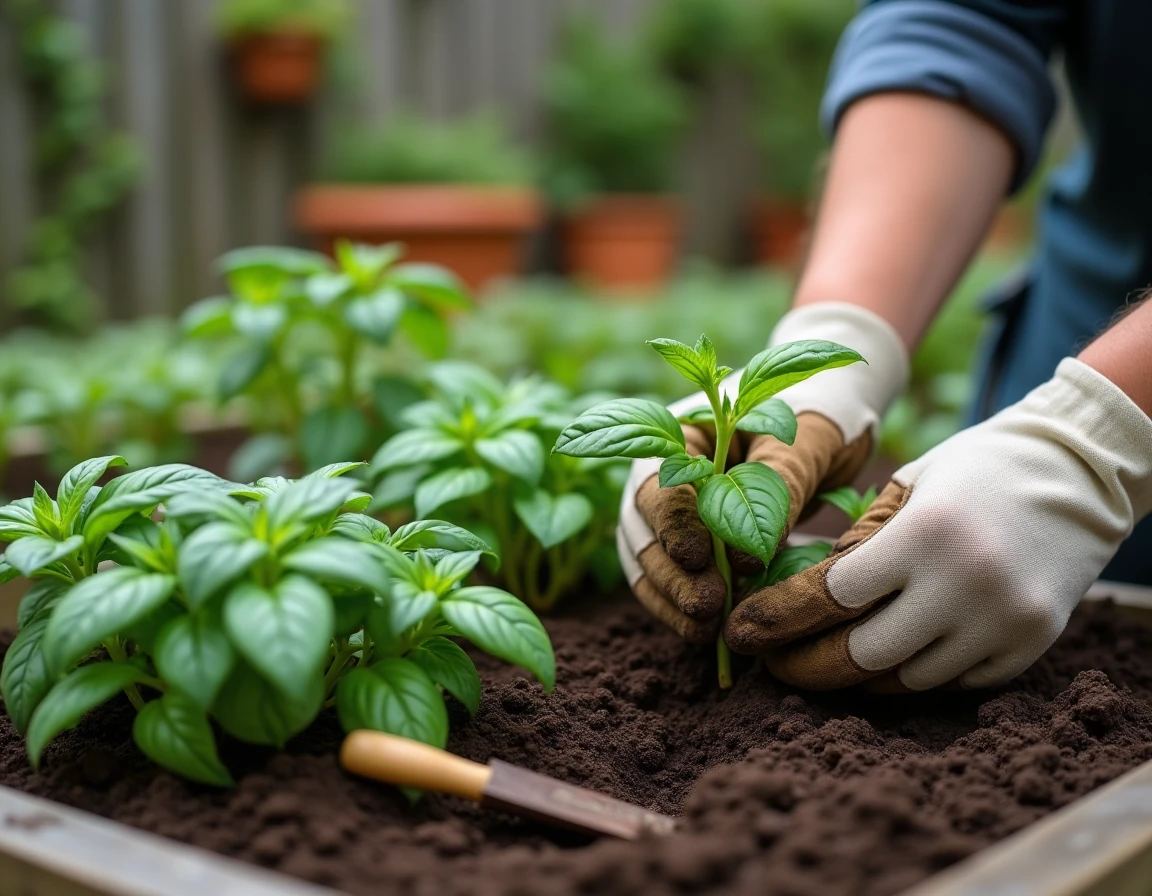
Plant density is another underestimated factor. In planters, there is a tendency to crowd the plants to save space. Basil less than fifteen centimeters from another competing plant cannot spread its roots or capture enough light. Foliage aeration decreases, and pests settle in more easily.
Basil seeds germinate well indoors near a bright window. But at the time of transplanting outdoors, checking the immediate neighborhood before planting helps avoid repeating the most common mistakes season after season.