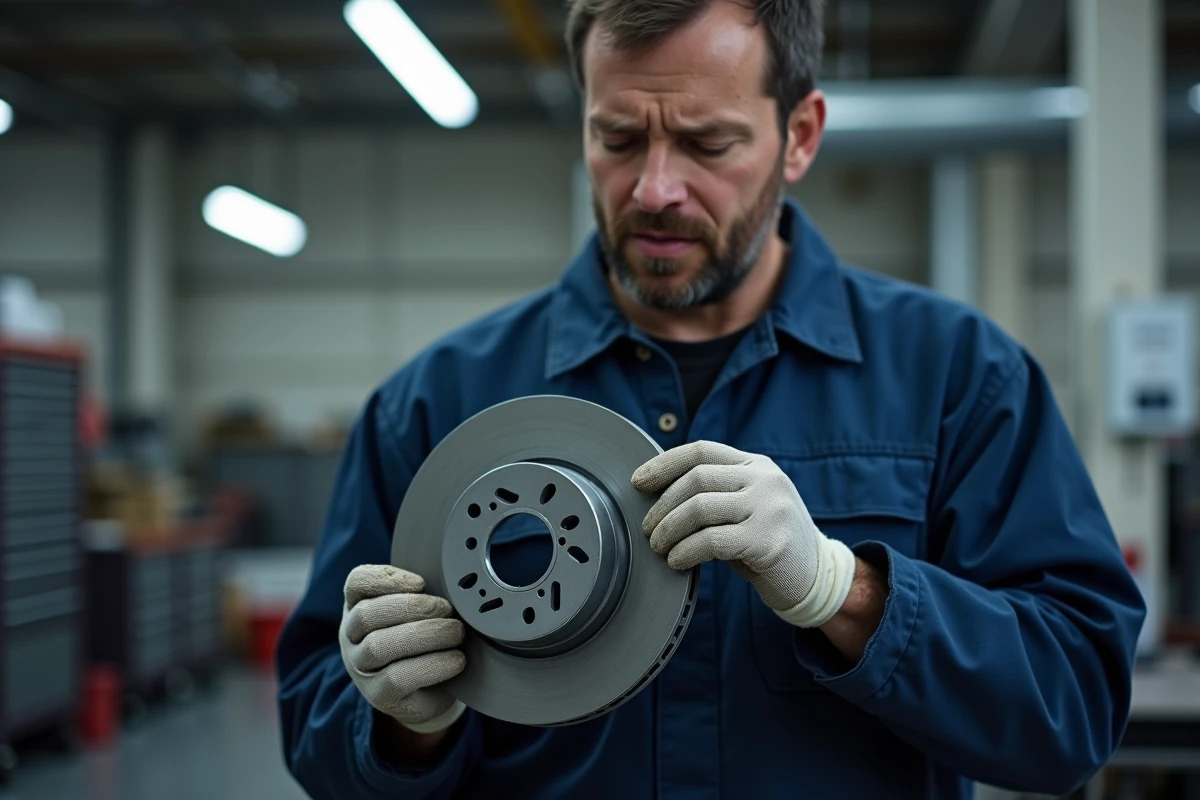
Some manufacturers impose an additional cost of several thousand euros for the carbon-ceramic brake option, while the majority of production vehicles remain equipped with conventional metallic brakes. However, several high-performance models swear by this technology, which is usually reserved for racetracks.
Depending on usage, the difference between ceramic and metallic brake pads is not limited to lifespan or performance. Maintenance requirements, wear resistance, and replacement costs vary significantly from one system to another. The technical choices made by manufacturers reflect specific compromises, rarely detailed at the time of purchase.
Ceramic or metallic brakes: what are the technical differences and for what uses?
When it comes to braking, the distinction between ceramic and metal is not a mere detail. Technically, the ceramic brake stands out due to its lightweight and tolerance to extreme temperatures. Carbon-ceramic discs, inherited from racing paddocks, withstand thermal accelerations and maintain their shape without flinching. Even under repeated stress, they dissipate heat at an impressive rate, eliminating the risk of fading that can undermine effectiveness after several hard stops.
In contrast, metallic brakes appeal due to their robustness and simplicity. Metallic pads, paired with cast iron discs, are found on most models in the market, from city cars to large family vehicles. Their main advantage? A much more reasonable acquisition and maintenance cost compared to their ceramic counterparts. For the driver, the braking feel remains constant when cold, predictable, and reassuring on a daily basis.
Each technology thus has its preferred terrains. For those aiming for performance or endurance, the advantages of ceramic brakes are clear: increased lifespan, consistent effectiveness even under heavy stress, and reduced unsprung weight. Conversely, for urban or versatile use, metallic brakes maintain strong arguments: contained cost, simple maintenance, and proven effectiveness. Choosing is not just about comparing two technical sheets: it involves understanding the subtleties of different types of pads, their behavior under heat, and the very philosophy of the vehicle.
Advantages and limitations of carbon-ceramic brakes in everyday use and on the track
Switching to carbon-ceramic brakes means accepting to shake up your habits. The pedal requires more energy when cold; the sensation is surprising during the first kilometers. But as soon as the temperature rises, the response becomes sharp and stable, even during repeated braking. On the track, where cast iron eventually gives in, the ceramic disc shines with its consistency: stop after stop, the power remains unchanged.
Over the kilometers, the longevity of this system makes a difference. Some owners exceed 100,000 kilometers before considering a replacement. Less dust, cleaner wheels, and increased agility thanks to reduced weight: these are all concrete advantages. But the bill can be steep. Pads and discs cost much more than their conventional equivalents, which can deter budget-conscious drivers.
In the city or in cold weather, the limitations of ceramic braking become apparent. The slower temperature rise impacts reactivity during short trips or frequent stops. This type of system primarily targets those seeking pure and consistent performance, while accepting certain compromises on versatility and maintenance budget.

How to choose the right braking system according to your vehicle and expectations?
The choice of braking system is never trivial. Beyond the technical aspects, it depends on driving style, vehicle weight, type of journey, and daily or sporty use. For urban drivers seeking smoothness and discretion, organic pads remain a safe bet. Their progressive engagement and silence are suitable for urban commutes where gentleness takes precedence over pure power.
Most production cars are equipped with metallic pads, a compromise between heat resistance, contained cost, and adaptability to the majority of uses. As electric cars gain ground, some manufacturers combine multiple materials to meet specific constraints, such as thermal dissipation or durability.
For sports car enthusiasts or larger vehicles, it’s hard to overlook carbon-ceramic brakes. Their endurance and consistency under extreme demands make a difference, whether on the track or during long descents. One must accept the harder pedal when cold, and especially, the cost when it comes time for replacement.
Here are the main categories suited to each need:
- Organic pads: for comfort, silence, preservation of discs, and predominantly urban driving
- Metallic pads: for their versatility, robustness, contained price, and mixed use
- Carbon-ceramic brakes: sought after for their endurance, thermal stability, and performance in sporty or demanding conditions
A coherent braking system is a balance between tires, discs, and pads. Replacing one part is no longer sufficient: one must think about safety, pleasure, and budget management in an overall vision. Ultimately, choosing your braking system is about shaping the very personality of your vehicle.