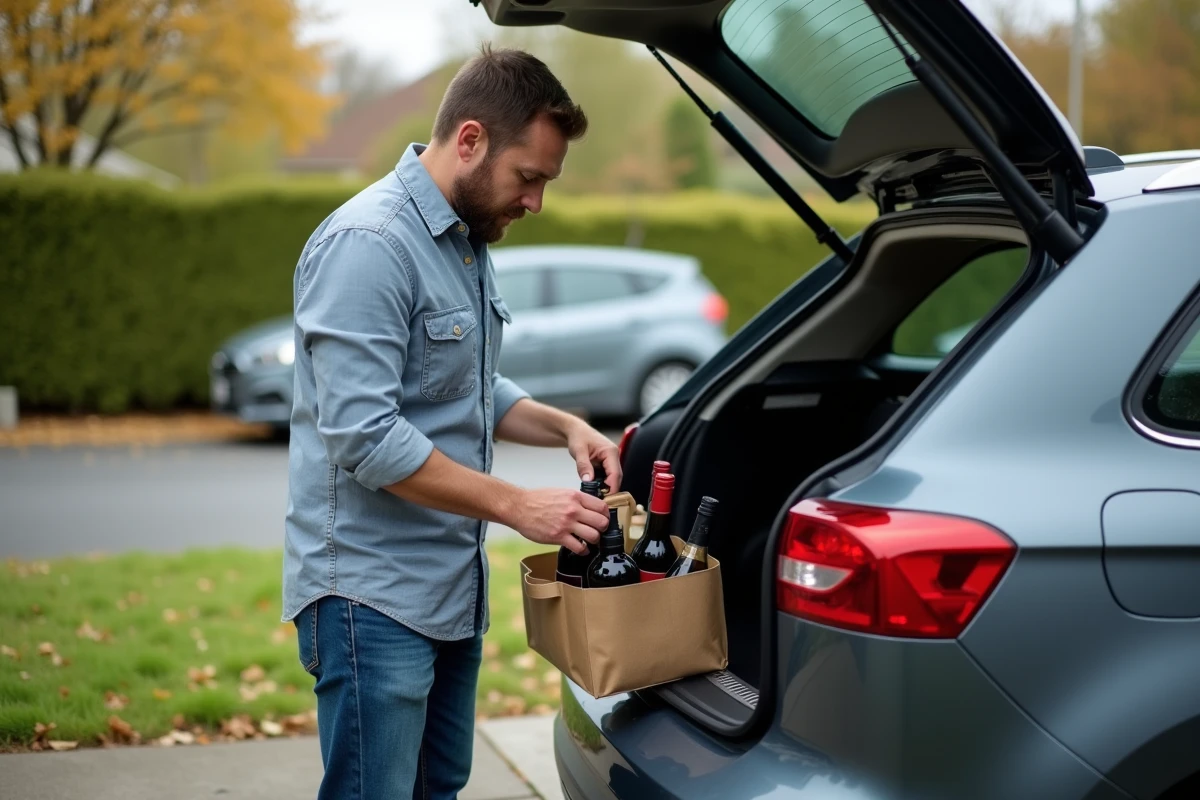
Transporting 100 bottles of wine has never been a crime in itself. However, the line between a wine enthusiast and an improvised trafficker quickly blurs when the trunk turns into a rolling cellar. In France, the law does not impose any specific limit on the transport of bottles of wine for personal use, as long as the destination remains private and non-commercial. Beyond a certain quantity, the presumption of commercialization applies, exposing the driver to the risk of fines.
European regulations set indicative thresholds for movements between member countries:
- 90 liters for still wine, of which a maximum of 60 liters for sparkling wines.
- Enhanced controls may occur if the quantities transported exceed these benchmarks.
Transporting wine by car: what the law says in France
Transporting alcoholic beverages in your vehicle always raises the same question: how much can you load without attracting attention? In France, the distinction is made between private use and commercial intentions. As long as the cargo is intended for your personal circle and not for resale, no strict threshold is imposed by law. However, authorities rely on customs benchmarks:
- 90 liters of wine
- of which a maximum of 60 liters for sparkling wine
Exceeding these volumes does not automatically trigger a penalty, but it may put you on the radar of customs officials with a suspicion of illegal sales or undeclared commercial activity. The administration remains attentive to the consistency between the quantity transported and the use you can justify.
The European framework complements this system: each member country adopts similar benchmarks for the transport of wine and other alcoholic beverages in personal vehicles. For France, these limits mainly serve as a reference. An individual transporting 80 liters of wine and 10 liters of crémant for a party or vacation will have nothing to fear if they can prove domestic use. On the other hand, accumulating boxes and pallets without a receipt or consistency with your family consumption may alert inspectors.
The question of how many bottles of wine to transport by car does not have a fixed answer but is part of a balance between individual freedom and the fight against trafficking. To avoid any inconvenience, transport your wine for a private event, birthday, wedding, or country stay, and always keep the receipt handy. For detailed information, check the page “Transporting wine by car: rules and legal limits to know – Motor X Club.”
Can you exceed the authorized quantities when traveling in Europe?
Crossing borders with bottles of wine in the trunk also exposes you to a variety of rules depending on the destination country. Within the European Union, free movement applies, but each state can set its own thresholds and controls. Crossing Latvia, Lithuania, Hungary, or Greece may encounter a much stricter tolerance grid than in France.
To navigate this, you need to know the authorized quantities in each country you pass through. French customs set the indicative limit for wine at 90 liters, including 60 liters of sparkling wine. However, crossing the border with 100 liters, even for personal consumption, may be enough to trigger a thorough check.
Customs officials focus on verifying that the transport is indeed for personal use. If you are transporting several cases for a wedding, the explanation is credible. Without justification, doubt arises. European harmonization is not complete; caution is advised, especially if the trunk also contains strong alcohol (whiskey, vodka, limoncello…).
Here are some reflexes to adopt for a smooth journey within the European Union:
- Always check the customs thresholds of the destination country.
- Keep the receipts of your purchases in case of inspection.
- Be ready to coherently explain why you are transporting such a quantity.
Differences from one country to another make any excess risky. French leniency does not necessarily extend to our neighbors.
Practical tips to avoid unpleasant surprises on the road
Transporting wine by car is not just about respecting the authorized quantities. You also need to pay attention to the condition of the load. Proper packaging minimizes breakage: use sturdy boxes, separate the bottles well, and stabilize them to avoid any shocks. Wine is sensitive: heat, light, jolts… anything can alter its quality. Protect the bottles in the trunk, under a blanket if necessary, and keep them upright as much as possible, especially for still and sparkling wines.
Remember to keep receipts or proof of purchase handy: in case of inspection, this will facilitate the demonstration of personal use and dispel any suspicion of illegal resale. In case of an accident or damage, some insurers will require an inventory: quickly note the references, quantities, and appellations transported.
Finally, caution remains your best ally: anticipate the uncertainties of the journey, adjust your driving to protect the load. If the quantity or destination raises doubt, turn to specialized companies in wine logistics; they ensure secure transport compliant with regulations. On the road, it’s better to be overly cautious than not cautious enough. A well-organized trunk, up-to-date documents, and a ready-to-use explanation: the winning trio for driving with peace of mind, without fearing the honk of an unexpected inspection.